
The Three Phases of Deep Healing
God gave us instincts to protect and manage wounds. Those instincts are present for both physical and emotional wounds. The deeper the wound, the more our protective instincts kick in and affect the healing process.
In the ministry we provide, we run into three levels of wounds and accompanying wound management. As you go deeper, the pace at which healing occurs will change and will require different issues to be addressed. The following is a simple summary of these three levels:
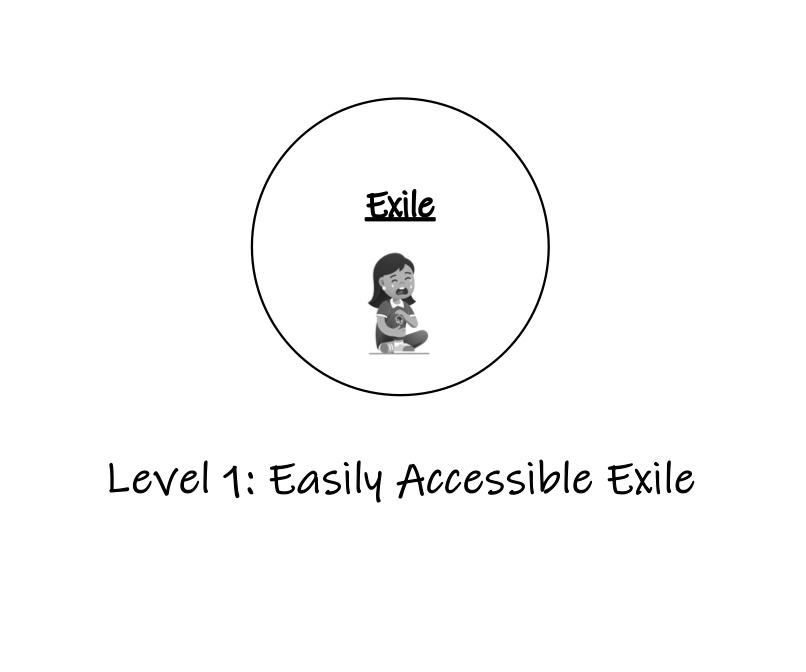
Level 1, Accessible Exiles: I would call this layer the low-hanging fruit of the healing process. These wounds can powerfully impact our lives but are not sensitive enough to invoke strong degrees of self-protection. At this level, healing generally progresses rapidly because all the resources of the mind are readily available to participate. Most well-developed healing ministry tools are effective. At some point, progress will begin to slow or may stop altogether.
At this point, some people are told they are not free because they do not have enough faith, they haven’t dealt with their demons, they haven’t forgiven the people who hurt them, etc. Please do not be taken captive by this kind of reasoning. You have not hit a wall; you have reached a transition point. Manager and firefighter parts are playing a more active role in deeper wounds and will require attention before those wounds can be accessed.

Level 2, Voluntary Self-Protection: In Level 2, when an exile becomes active, manager and/or firefighter parts also become active. These reactions can be instinctual and can make it difficult to reach the wounded exile.
You may feel an exile begin receiving healing in prayer ministry only to feel something interrupt the flow and start analyzing what is happening. This is often a manager part who is used to being involved with anything related to the exile. Or manager parts who function as inner critics may block access to the exile out of disdain for the emotions carried in the exile. This can make it feel impossible to reach the root of the wound. Protective parts may prevent touching the exile’s inner pain.
We work with you to identify and distinguish the activities of managers and firefighters so that their needs can be addressed separately from exiles. At this level, once these parts are recognized and their roles related to any given wound are addressed, the exile is usually able to be accessed and healed.
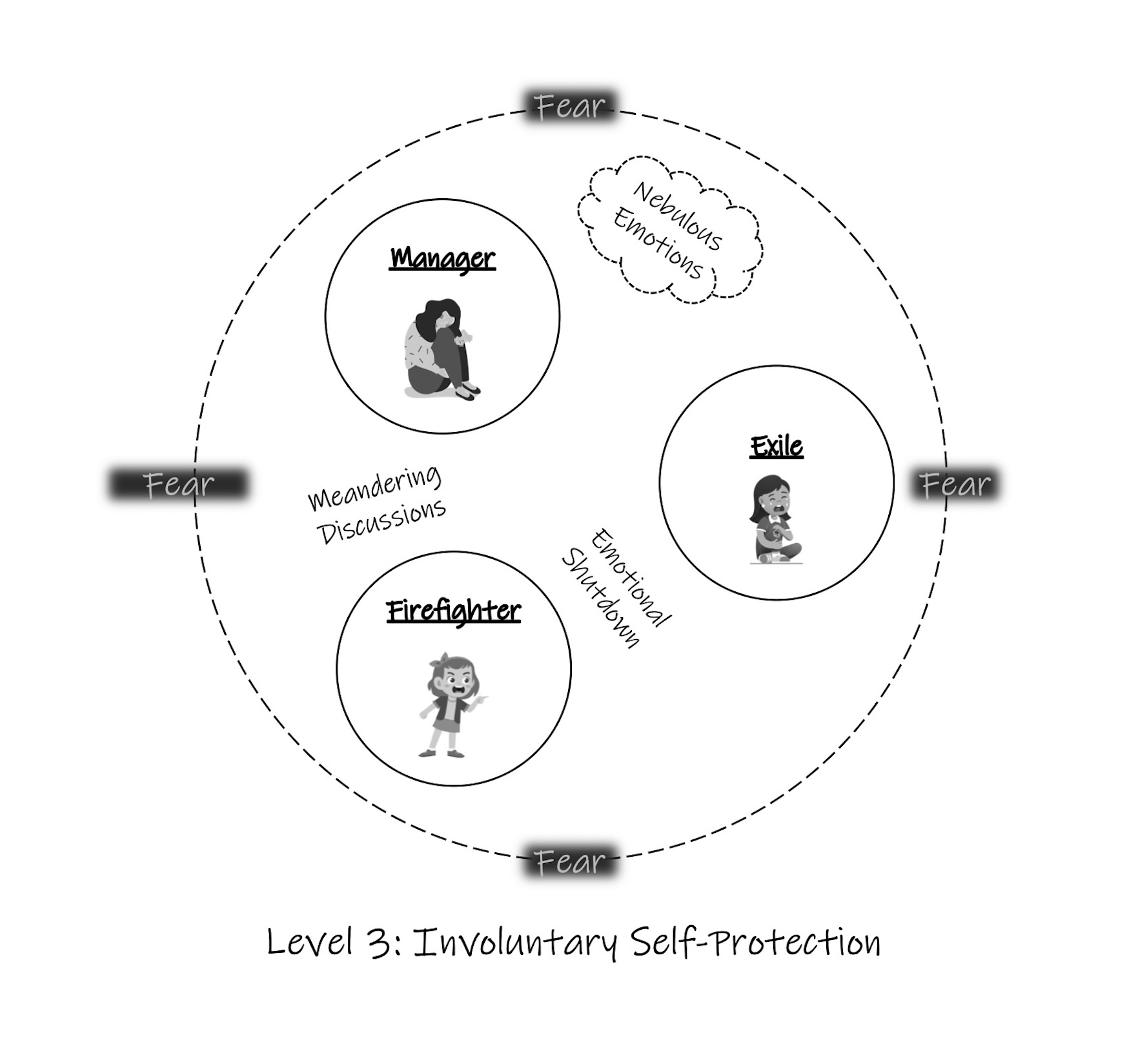
Level 3, Involuntary Self-Protection: In Level 3, involuntary and/or subconscious blocks to accessing wounds becomes much more powerful. There is a simultaneous and often instinctual triggering of all three types of parts. However, Level 3 reactions can be more difficult to unpack. They reactions include such things as an inability to define emotions, involuntarily turning off emotions, long, overly analytical explanations from managers that act as diversions from entering the healing process, and more. Level 3 can involve parts whose self-esteem is so devastated that they are afraid of being fully present, no matter what the purpose of doing so may be.
In Level 3, we must avoid the temptation to press harder into healing techniques that are no longer working. We must understand what is blocking the heart. Sometimes we can ask a manager or firefighter who they are blocking, then address their needs with the Lord. Sometimes we must make it safe for a part to be present, even if it is for a short period of time at first.
We may need to find and strengthen the true self, who carries a sense of well-being. The presence of the true self can be felt by other parts and can help them find confidence that healing is possible. Level 3 usually moves in small increments. At this level, small steps forward can be immensely meaningful.
We will also work to equip you to make engagements with the Lord part of your daily walk, as these help you discover the needs of your parts. You may be able to heal them on your own or bring the things you have learned about yourself to your next ministry appointment.
Do Not Limit Your Use of Healthy Resources
While we believe God can heal all emotional wounds, the healing process is always constrained by the knowledge and capabilities of your minister and the tools they use. Once you understand Christianity well enough, you understand that good mental health practices and good theology are always in agreement. We also believe ministry and therapy are different. Therefore, ministry should not be considered a substitute for therapy. A good therapist should be considered a valuable resource in your healing journey. Their skill set is just as available to be used by God as that of any minister.
Measuring Progress—A Simple View
The healing journey is less like balancing scales or climbing a hill than it is like plugging holes. If you have 30 holes in your backyard, some three-feet deep, some 15, and some 30, any one hole can be a problem. If you have filled 27 out of 30 holes, your backyard will be safer, more enjoyable, and an easier place to live. But if you fall into a single remaining 30-foot hole, you will have just as big of a problem on your hands as when you had 30 unfilled holes. While at the bottom of that one hole, you will not sense that the 27 other holes have been filled.
Healing wounded parts is like filling holes. Being triggered by an unhealed part does not mean you have regressed. It only means there are still some holes to fill.
As healing progresses, you will find that your recovery time from being triggered becomes shorter. Your confidence in daily life will increase. You will find yourself in “adult mode” more and more of the time. When things that used to trigger you happen, instead of losing control, you will recognize the needs of the situation and address them in a productive, loving manner for all involved. Your sense of oneness with God will become more natural and become more of a steady flow in your life. You will feel more consistent joy, confidence, wisdom, and will find more natural, instinctual expressions of the fruit of the Spirit (Galatians 5:22-23) as a byproduct of increasing oneness with God in your life.